Drug discovery with clinical data and experimental biology since 2016.
Today, we combine clinical data analysis, machine learning, and experimental models to investigate disease mechanisms and test target hypotheses.
We study disease patterns across people and experimental models.
BioSymetrics is a phenomics-driven drug discovery company. We combine longitudinal clinical records with genomic, imaging, molecular, and outcomes data to describe variation in disease. We compare these patterns with phenotypes measured in experimental models to develop biomarker and target hypotheses.
Machine learning supports data integration, patient stratification, and hypothesis prioritization. Our Phenograph™ maps clinical and model system phenotypes to genes, pathways, targets, and therapies. Contingent AI™ evaluates data processing, integration, feature selection, and modelling choices for each dataset and research question.
Computational results inform which hypotheses to test. Depending on the question, we use automated zebrafish assays or human cellular and organoid models. Computer vision measures morphology, physiology, and behaviour in zebrafish experiments.
Work shaped around the research question.
For each project, we agree on the question and the decision it needs to inform. We review available cohorts, clinical and molecular data, models, and assays, then scope analysis and validation around the evidence and the next step. A project can use one capability or several.
We analyze longitudinal clinical, genomic, imaging, and outcomes data to identify disease subgroups, biomarkers, progression patterns, and mechanisms. The results can inform patient selection, biomarker assessment, and decisions about what to validate.
Using human and model system phenotypes, our models predict the effects of gene disruption and prioritize targets and hypotheses in silico. MOA Miner analyzes phenotype screening hits to rank possible targets, mechanisms of action, and pathways. These rankings help select hypotheses for follow-up experiments.
Automated zebrafish assays and computer vision quantify morphology, physiology, and behaviour across high-throughput experiments. Where a program calls for an additional model, selected hypotheses can also be studied in human cells or patient-derived organoids. We compare experimental readouts with predictions to decide what to investigate next.
Our disease work includes neurodegeneration and rare epilepsy. In Parkinson’s disease, we analyzed more than 650 participants and approximately 4,500 proteomic probes, identifying three subtypes associated with different progression patterns. Planned partner studies will examine selected signatures in patient-derived organoids and human cellular systems. For rare epilepsy, zebrafish models and automated behavioural readouts are used to screen and assess compounds.
Separately, we apply phenotypic screening and mechanism analysis to chemical threat assessment.
A team working across data science and experimental research.
Our team brings experience in entrepreneurship, machine learning, and R&D. Our Advisory Board includes scientists and technologists with expertise in data, machine learning, and in vivo validation.
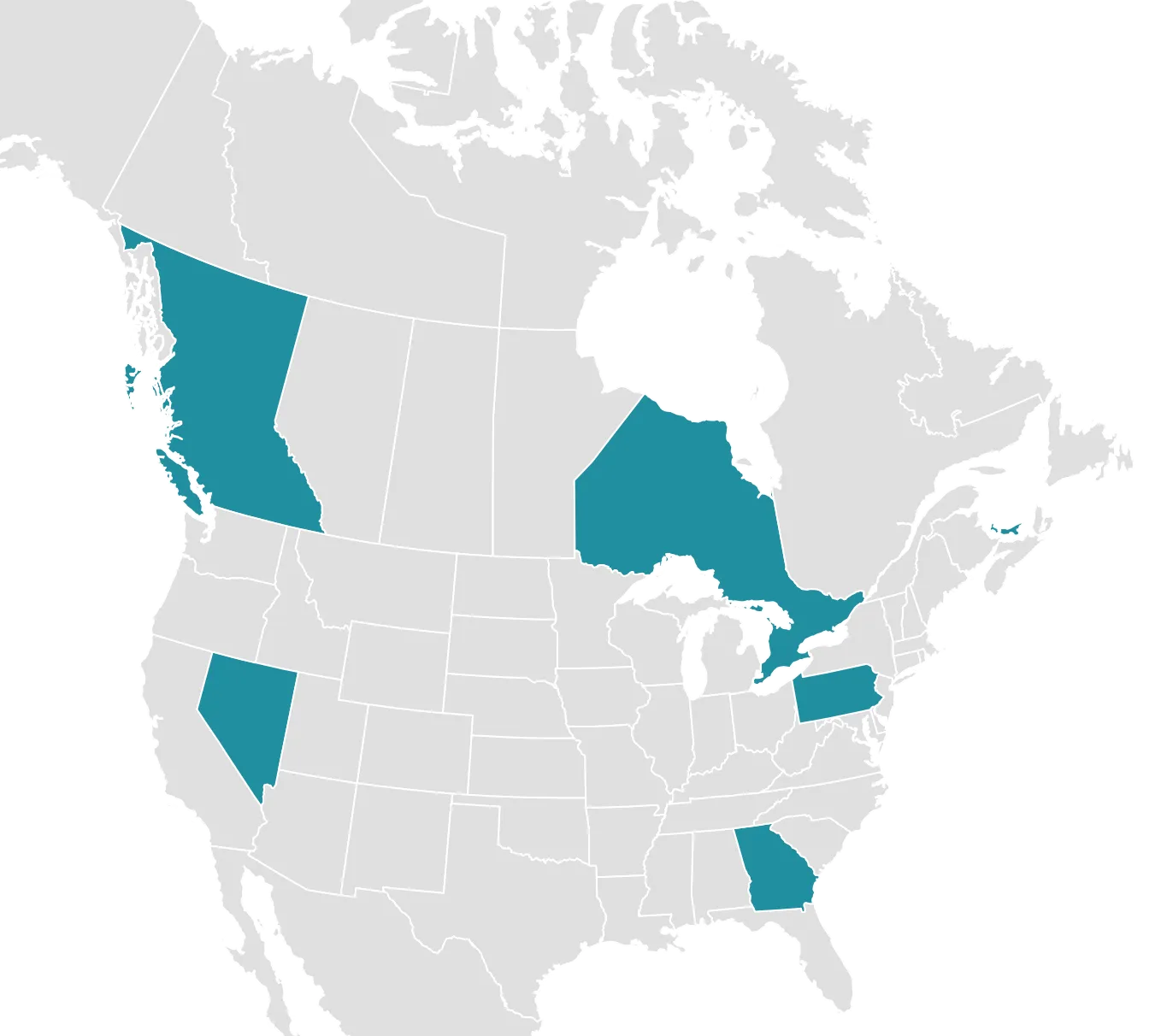
We are a remote-first company with our team distributed across Canada and the United States.
What disease question could we explore together?
Bring us a patient dataset, candidate target, phenotype screen, or disease model. We can discuss which combination of clinical analysis, machine learning, and experimental validation fits your next decision.
Partner with us