
Patient stratification
Define patient subgroups that can support selection, enrichment, and treatment response analysis.

BioSymetrics' Clinical Insights platform connects longitudinal clinical, genomic, imaging, and outcomes data to identify meaningful patient subgroups, biomarkers, disease mechanisms, and development decisions.
Clinical datasets are often large, fragmented, and shaped by different disease trajectories. Our Clinical Insights platform brings together clinical and molecular evidence to help partners investigate the biology behind those patterns.
Combining clinical and molecular evidence helps partners ask which patients differ, which signals track progression, and which hypotheses deserve further study.
We use our Contingent AI™ framework to standardize biomedical data, reduce structural bias, and identify phenotypic subgroups and progression patterns. Our Phenograph™ connects phenotypes with genes, pathways, targets, and therapies so partners can move from observed patterns to testable hypotheses.
For suitable programs, those hypotheses can move into model system experiments and high-content phenotypic readouts. The workflow keeps clinical insight connected to biological validation.
Define patient subgroups that can support selection, enrichment, and treatment response analysis.

Connect early markers and longitudinal outcomes to progression, prognosis, and next questions for validation.

Use patient subgroups, longitudinal outcomes, and response patterns to inform inclusion criteria, endpoints, and future trial design.

Prioritize targets and therapeutic hypotheses for translational validation.
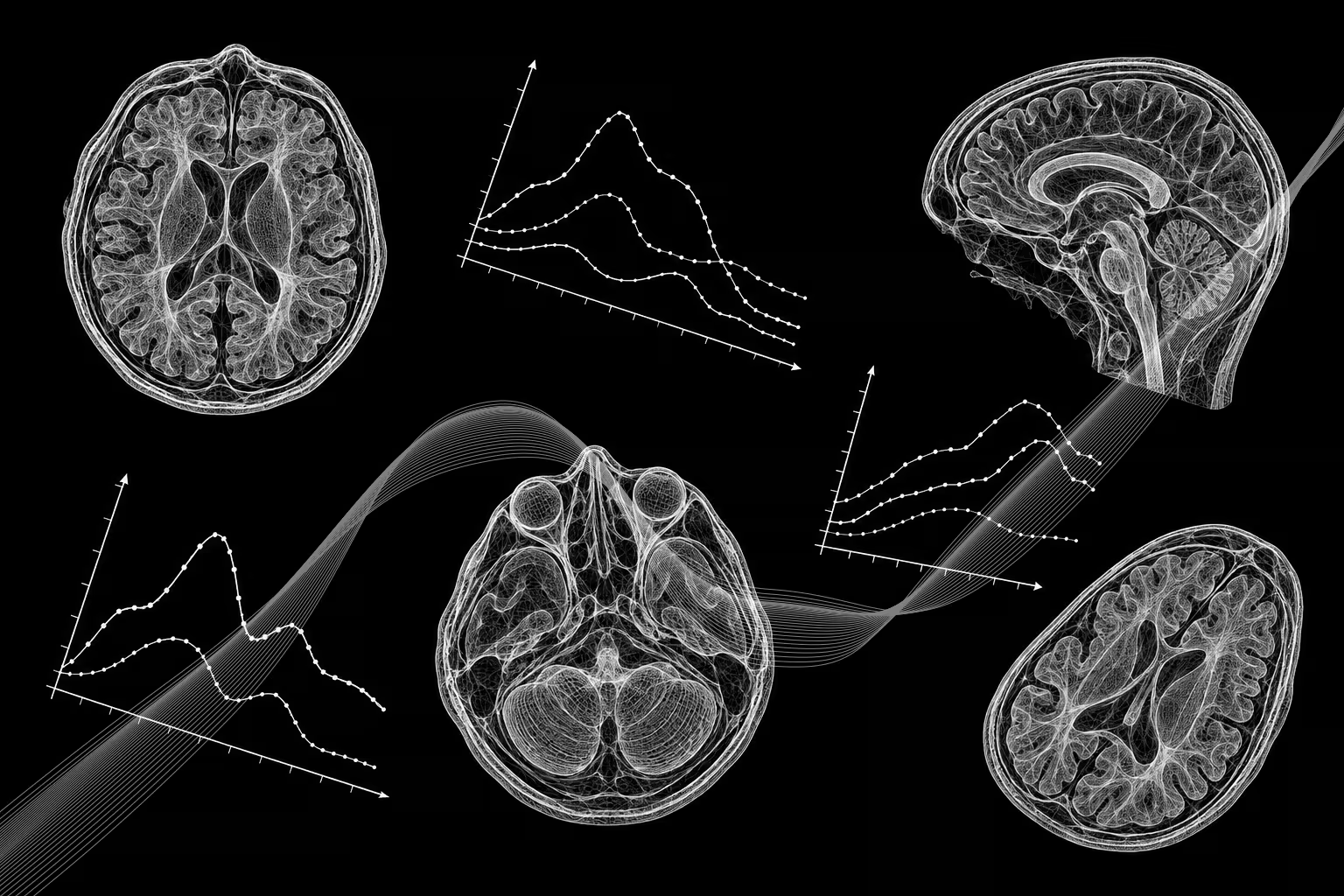
In Parkinson's disease, we analyzed data from more than 650 participants, combining longitudinal clinical and imaging data with approximately 4,500 proteomic probes to identify three subtypes associated with different progression patterns and candidate biomarkers.
In Duchenne muscular dystrophy, we led the integration of clinical and proteomic data across more than 700 longitudinal serum samples and contributed modelling associated with motor performance and disease progression.
We work with pharma, biotech, hospitals, health systems, and genomics and research organizations on biomarker discovery, patient stratification, clinical trial optimization, and target validation.
Partner with us